
This specialized program will help Compliance Officers and anyone interested to gain knowledge of risk management to prevent money laundering, terrorist financing and other crimes, and to analyze the Money Laundering Prevention Regulations and the risk-based (RBA) management models issued by the oversight body — SBS – UIF Peru.
Líderes APLA WhatsApp community
Join our community in Peru: AML/CTF updates straight to your WhatsApp.
Join the community

Our commitment
- Provide Compliance Officers with the knowledge to carry out their duties in managing ML/TF/PF risks and preventing companies from being used to launder money.
- Help Compliance Officers meet the annual training requirement set by the SBS.
- Provide knowledge to anyone interested in implementing management systems that protect their companies from money laundering and terrorist financing.
Duration and certification
40 academic hours, certified by Líderes APLA with a digital certificate. Classes are live; if you cannot attend, they are recorded in the virtual classroom, where you will have access to the recordings, up-to-date regulations, presentations and all downloadable materials.
Digital materials included
- SPLAFT Matrix template.
- AML/CTF/PF Prevention Manual template.
- Annual Work Plan template.
- Annual Compliance Report (IAC) template.
- ROS (STR) report template.
- Structure of the Transaction Register (RO).
- Among others.
Syllabus
- Class 1. National and international regulatory framework of the SPLAFT
- Class 2. SPLAFT governance and the role of the Compliance Officer
- Class 3. Corruption prevention and integration with compliance systems
- Class 4. ML/TF/PF risk management and the institutional risk matrix
- Class 5. Customer scoring, segmentation and due diligence
- Class 6. Records, transaction monitoring and alert management
- Class 7. New typologies, emerging risks and digital ML/TF/PF threats
- Class 8. Analysis of unusual transactions and preparing the STR
- Class 9. Artificial Intelligence applied to ML/TF/PF prevention
- Class 10. Compliance Officer reports and assessing SPLAFT effectiveness
Class 1. National and international regulatory framework of the SPLAFT
- FATF standards and recommendations related to ML/TF/PF prevention.
- Peruvian regulatory framework for ML/TF/PF prevention and the main obligations of obligated entities.
- The Financial Intelligence Unit of Peru (UIF-Peru): functions, powers and relationship with obligated entities.
- Obligated entities covered by the general system and the limited prevention system, under the applicable regulations.
- Responsibilities and consequences of failing to comply with ML/TF/PF prevention obligations.
Class 2. SPLAFT governance and the role of the Compliance Officer
- Structure, components and responsibilities within the ML/TF/PF Prevention System.
- Appointment of the Compliance Officer: requirements, registration and notification to the competent authority.
- Legal, technical and ethical responsibilities of the Compliance Officer; independence, authority and relationship with senior management and the regulator.
- Preparing and updating the AML/CTF Prevention Manual and the Code of Conduct: structure, policies and procedures.
- Assignment of responsibilities, senior management commitment and employee participation in implementing the SPLAFT.
Class 3. Corruption prevention and integration with compliance systems
- Main corruption offenses and schemes, with emphasis on the risks that may be linked to money laundering.
- Identifying and assessing corruption risks in the organization’s activities and operations.
- Elements of the prevention model under Law No. 30424 and its applicable provisions.
- Principles and components of the anti-bribery management system based on the ISO 37001 standard.
- Aligning the SPLAFT with integrity, corruption prevention and compliance risk management mechanisms.
Class 4. ML/TF/PF risk management and the institutional risk matrix
- Risk-based approach and FATF Recommendation 1: identifying, assessing and understanding risks.
- Identifying ML/TF/PF threats, vulnerabilities and risk factors in the organization’s activities.
- Inherent risk assessment methodology: criteria, rating scales and factor weighting.
- Designing the institutional risk matrix: identifying controls, assessing their effectiveness and determining residual risk.
- Risk treatment and monitoring: action plans, owners, deadlines and follow-up indicators.
Class 5. Customer scoring, segmentation and due diligence
- Customer, geographic area and product or service risk factors, taking into account channels and transaction characteristics where applicable.
- Defining variables, rating criteria and weighting to design customer scoring.
- Calculating and interpreting the customer risk profile and setting risk segments.
- Identification, verification and information update procedures; applying due diligence regimes according to the level of risk.
- Identifying and handling Politically Exposed Persons (PEP), beneficial owners and matches in control lists and other information sources.
Class 6. Records, transaction monitoring and alert management
- Transaction Register (RO): covered transactions, thresholds and obligations applicable to the obligated entity.
- Recording single and multiple transactions, register structure, submission channels and deadlines.
- Unusual Transaction Register (ROI) or equivalent internal register, in accordance with the applicable regulations and procedures.
- Red flags and criteria for transaction monitoring, taking into account the customer profile and transaction patterns.
- Alert management: intake, preliminary analysis, documentation, follow-up and escalation of transactions that require further review.
Class 7. New typologies, emerging risks and digital ML/TF/PF threats
- Money laundering and terrorist financing typologies: concepts, characteristics and behavior patterns.
- Digital fraud, identity theft, synthetic identities and the use of money mules.
- Risks associated with virtual assets, stablecoins, digital wallets and transactions through technology platforms.
- Use of third parties, transaction structuring, rapid movement of funds and domestic or cross-border transactions to conceal the origin or destination of funds.
- Identifying patterns and red flags linked to emerging risks, and incorporating them into monitoring and internal prevention procedures.
Class 8. Analysis of unusual transactions and preparing the STR
- Distinguishing between ordinary, unusual and suspicious transactions; criteria for deciding when further analysis is needed.
- Transaction analysis methodology: review of the customer profile, source and destination of funds, economic rationale and available documentation.
- Assessing red flags and typologies, identifying inconsistencies, links between transactions and gathering supplementary information.
- Preparing the Suspicious Transaction Report (ROS/STR): content, supporting evidence, narrative clarity and documentation of the relevant elements.
- Timely reporting to the UIF-Peru, confidentiality, the prohibition on tipping off where applicable and the risks of failing to report or filing inadequate reports.
Class 9. Artificial Intelligence applied to ML/TF/PF prevention
- Fundamentals of artificial intelligence, machine learning and generative artificial intelligence, and how they differ from rule-based automation.
- AI applications in due diligence, customer classification, inconsistency detection and alert prioritization.
- Using AI tools to organize information, build timelines, summarize documentation and draft analysis reports.
- Designing instructions (prompts) to support the Compliance Officer’s work, validating results and checking them against the original sources.
- Risks and controls for the responsible use of AI: confidentiality, data protection, bias, errors, traceability, human oversight and the limits of automation in compliance decisions.
Class 10. Compliance Officer reports and assessing SPLAFT effectiveness
- Purpose, structure and differences between the Compliance Officer Semi-Annual Report (ISOC) and the Compliance Officer Annual Report (IAOC), where required.
- Preparing and consolidating information on compliance with policies, procedures, obligations and work plan activities.
- Follow-up on supervisor observations, regulatory requirements, detected non-compliance and corrective measures.
- Management indicators and assessment of SPLAFT effectiveness: monitoring, alerts, registers, reports, controls and improvement actions.
- Preparing supporting information, and recording and submitting reports through the channels or portals established by the competent authority, under the applicable obligations.
Faculty
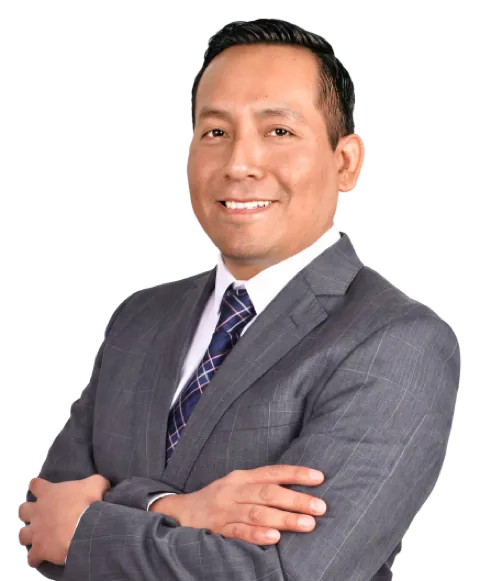
Program taught by Shella Mendieta and Orlando Martínez, Líderes APLA faculty — see their full profiles on the Faculty page.

Program benefits
- Training on current regulations for each economic sector.
- Application of the regulations through practical workshops.
- Practical tools to implement the AML/CTF/PF Prevention system.
- Q&A with national and international faculty.
- Exclusive access to the Líderes APLA student group.
Why take the Compliance Officer Program in Peru?
Peru, like other countries in the region, is a member of the Financial Action Task Force of Latin America (GAFILAT) and must therefore adopt the recommendations of the Financial Action Task Force (FATF). Recommendation 1 states that financial institutions and designated non-financial businesses and professions (DNFBPs) must identify, assess and take effective action to mitigate their money laundering and terrorist financing risks.
According to the 2021 National Risk Assessment published by the Superintendency of Banking, Insurance and Private Pension Funds (SBS), the main vulnerabilities affecting the fight against money laundering in Peru are: the lack of social awareness of the consequences of money laundering, corruption among justice operators, and conditions that facilitate public corruption, including tolerance of it.
In this regard, a risk-based approach makes it possible to identify the greatest risks, so that the obligated entity can apply enhanced measures to high risks and optimize resources at the levels identified as low. It also seeks to raise social awareness so that obligated entities conscientiously fulfill their money laundering prevention responsibilities.
By the end of the program
You will be able to:
- Work as a Compliance Officer, carrying out duties aimed at managing ML/TF/PF risks and preventing companies from being used to launder money.
- Implement management systems that protect companies from money laundering and terrorist financing.
- Develop and implement matrices to determine the customer risk profile.
- Identify red flags related to the most common money laundering typologies.
Payment methods
Bank transfer, deposit, credit or debit card. We accept all cards.
Frequently asked questions
Who is this program aimed at?
- Legal representatives, owners and managers of entities obligated to report to the Financial Intelligence Unit (UIF) of Peru.
- Compliance officers of obligated entities.
- External auditors who carry out compliance audits.
- The general public interested in training in money laundering prevention.
Ready to comply with regulations?
Our specialists guide you from diagnosis through implementation.