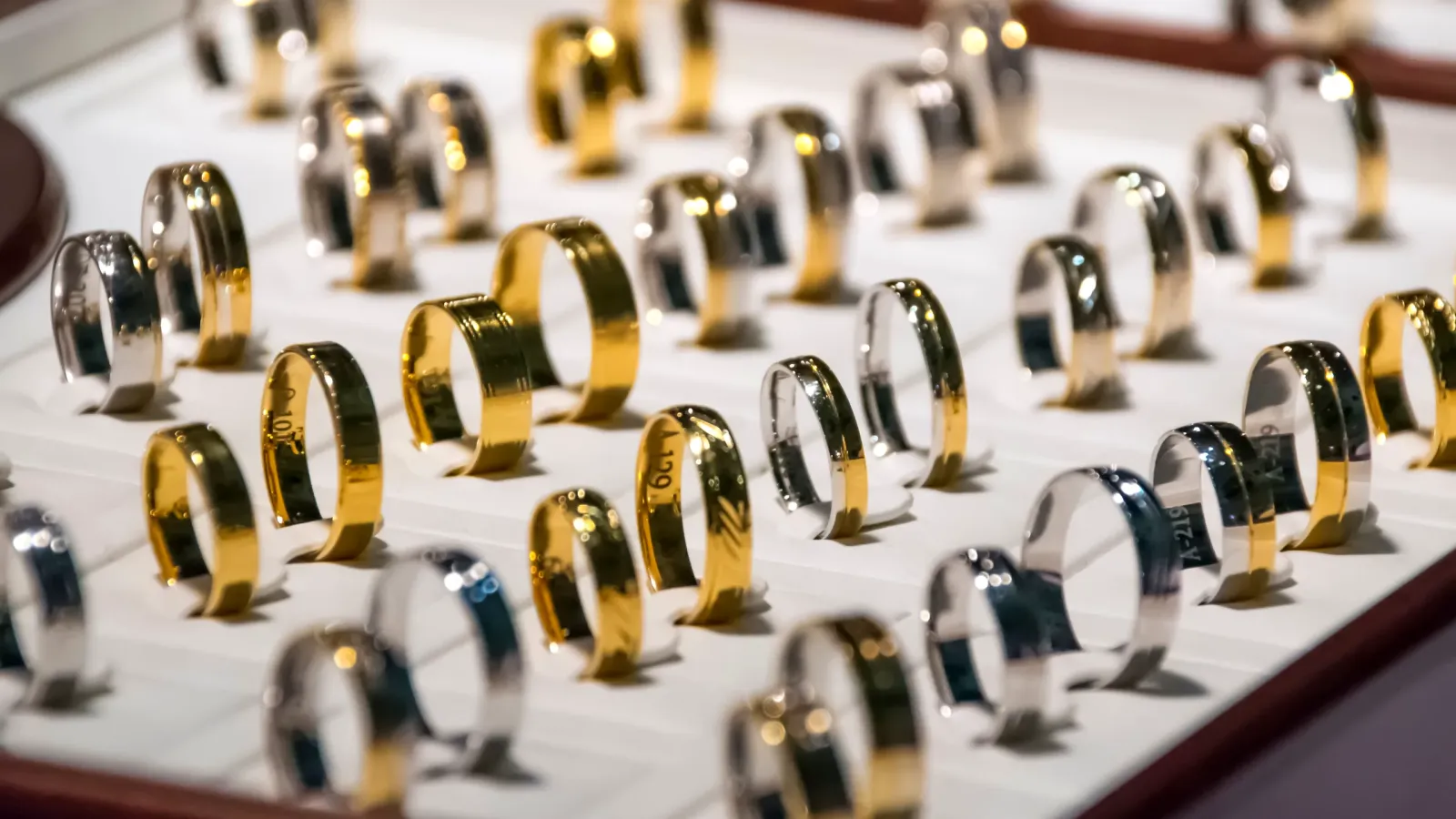
SPLAFT for jewelers and precious metals dealers
The anti-money laundering and counter-terrorist financing prevention system (SPLAFT) is mandatory for anyone who buys or sells jewelry, gold and precious stones in Peru. They are supervised by Peru's Financial Intelligence Unit (UIF-Perú), part of the Superintendency of Banking, Insurance and Private Pension Funds (SBS). The sector rule is article 38 of SBS Resolution 789-2018, which implements Law 29038 and Law 27693.
A high-value piece of jewelry fits in a pocket, holds its value and is often paid for in cash. If you sell a piece of gold or gemstone jewelry priced at US$1,000 or more, your jewelry business is already an obligated entity. Líderes APLA builds the system from the display case backward: the buyer, the gold supplier and the payment method.

Is your company obligated under the SPLAFT?
| Scenario | Condition or threshold | Supervisor | Regulation |
|---|---|---|---|
| Jewelry trade | Purchase or sale of a piece of gold or precious-stone jewelry from US$1,000; costume jewelry is excluded | UIF-Perú | SBS Res. 789-2018, art. 3 and art. 38 |
| Trade in precious metals or stones | Purchase and sale of gold and of the stones on the official list (diamond, emerald, ruby, sapphire and topaz, among others) | UIF-Perú | SBS Res. 789-2018, art. 38; Supreme Decree 020-2017-JUS, 3rd final supplementary provision |
| Mining company that trades gold | Operates under concessions and buys, sells, imports or exports raw or semi-processed gold | UIF-Perú | SBS Res. 789-2018, art. 38 |
The jewelry SPLAFT covers individuals and legal entities, with no annual sales threshold. A business with another obligated activity keeps a separate record for each one (art. 22.3).
Elements of the SPLAFT in the jewelry trade
- Compliance Officer: appointed by the board; an individual business owner can be their own officer (art. 5.4).
- Customer due diligence: general and enhanced regimes, with the beneficial owner identified. The customer is whoever acquires the jewelry, gold or stone.
- Knowing your suppliers: due diligence on whoever sells you gold, gems or jewelry (art. 38).
- Transaction record (RO): every purchase or sale of US$15,000 or more is logged the same day. The jeweler may set a lower threshold.
- Manual and code of conduct: policies, procedures, red flags and internal sanctions.
- Risk assessment and audit: an AML/CTF risk matrix, updated at least every three years (art. 28). Internal and external audits where applicable (art. 38, item 17).
ROS and transaction records with the UIF-Perú
| Obligation | Channel | Deadline |
|---|---|---|
| Designation of the Compliance Officer | SISDEL (the electronic system for registering Compliance Officers) | 15 business days from designation (art. 7.2) |
| Change of details or removal of the officer | SISDEL | 5 business days (arts. 7.4 and 7.5) |
| ROS (suspicious transaction report) | ROSEL (the online suspicious transaction reporting system), by the officer | Within 24 hours of being classified as suspicious, regardless of the amount (art. 23.1) |
| Transaction record | PLAFT Portal (the UIF-Perú's online reporting portal) | Submitted at the frequency set by the SBS (art. 22.4) |
| Officer's annual report (IAOC) | PLAFT Portal | Approved within 30 days and submitted by February 15 (art. 26) |
SPLAFT documentation, the RO and the supporting evidence for each ROS are kept for at least five years (art. 31).
Red flags in the jewelry and gold trade
The national typologies on illegal gold published by the UIF-Perú describe:
- Suppliers with no registered mining output or track record to justify the gold.
- Heavy use of cash in gold sales, with no proof of its lawful origin.
- Newly formed gold-collecting companies with minimal capital, located in illegal mining areas.
- The same network of partners behind several successive gold collectors or jewelry stores.
- Payments from abroad that leave the same day in cash or as checks to unrelated third parties.
Penalties for failing to comply with the SPLAFT
A jewelry business organized as a company risks from 7 to 100 tax units (UIT) for a very serious infraction, from 2 to 20 for a serious one and from a warning up to 10 UIT for a minor one. Penalties are imposed by the SBS, through the UIF-Perú, under the Regulation on Infractions and Penalties approved by SBS Res. 8930-2012.
How Líderes APLA implements the SPLAFT at your jewelry business
- Assessment: jewelry, metals or precious stone trade, and the regime that applies to your officer.
- Risk matrix: type of piece, cash payment and the gold's area of origin, with customer and supplier scoring.
- Manual and code of conduct for the counter and the workshop: customer and gold supplier forms, and RO and ROS procedures.
- Training: for the officer and staff, with online courses.
- Due diligence with AplaSoft: date- and time-stamped watchlist screening that feeds the matrix.
It is part of our AML/CTF Consulting in Peru; see the regulations and the glossary.
If you sell gold or gemstone pieces from US$1,000, the SPLAFT already applies to you: request a free assessment of your system.
Updated: October 2026.
Frequently asked questions
Is a jewelry store that sells costume jewelry obligated?
Do I have to record a US$8,000 sale?
Who can be the Compliance Officer at a small jewelry store?
What if my jewelry business already has a SPLAFT?
Tell us what your company needs
Fill in the form and a specialist will get back to you shortly with the scope for your sector. Free of charge and with no commitment.